Business Lesson 101: don't tell your customers you don't trust them. It sounds too obvious to write down. Yet businesses do it every single day, usually with a straight face and a policy to point at.
Years of good business, undone by one text
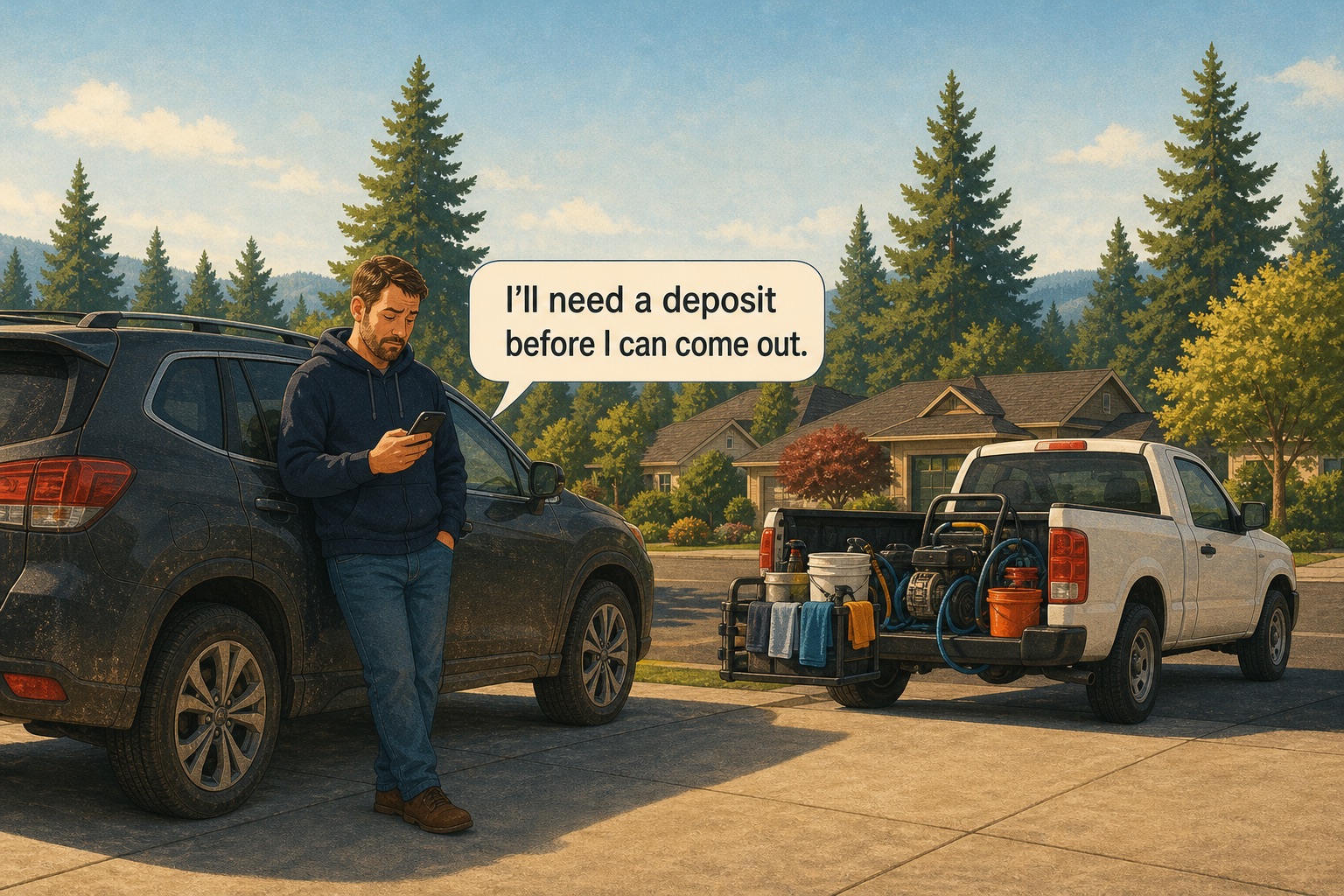
I've used the same car detailer for years. When I started with him, it was basically a guy with a truck. I'd text him. He'd show up and make my cars look new. I'd pay him, and I'd tip him. No portal, no booking app, no drama. Two adults doing business. That's how it's supposed to feel.
Today I texted him that I was ready for a cleaning. Here's what came back:
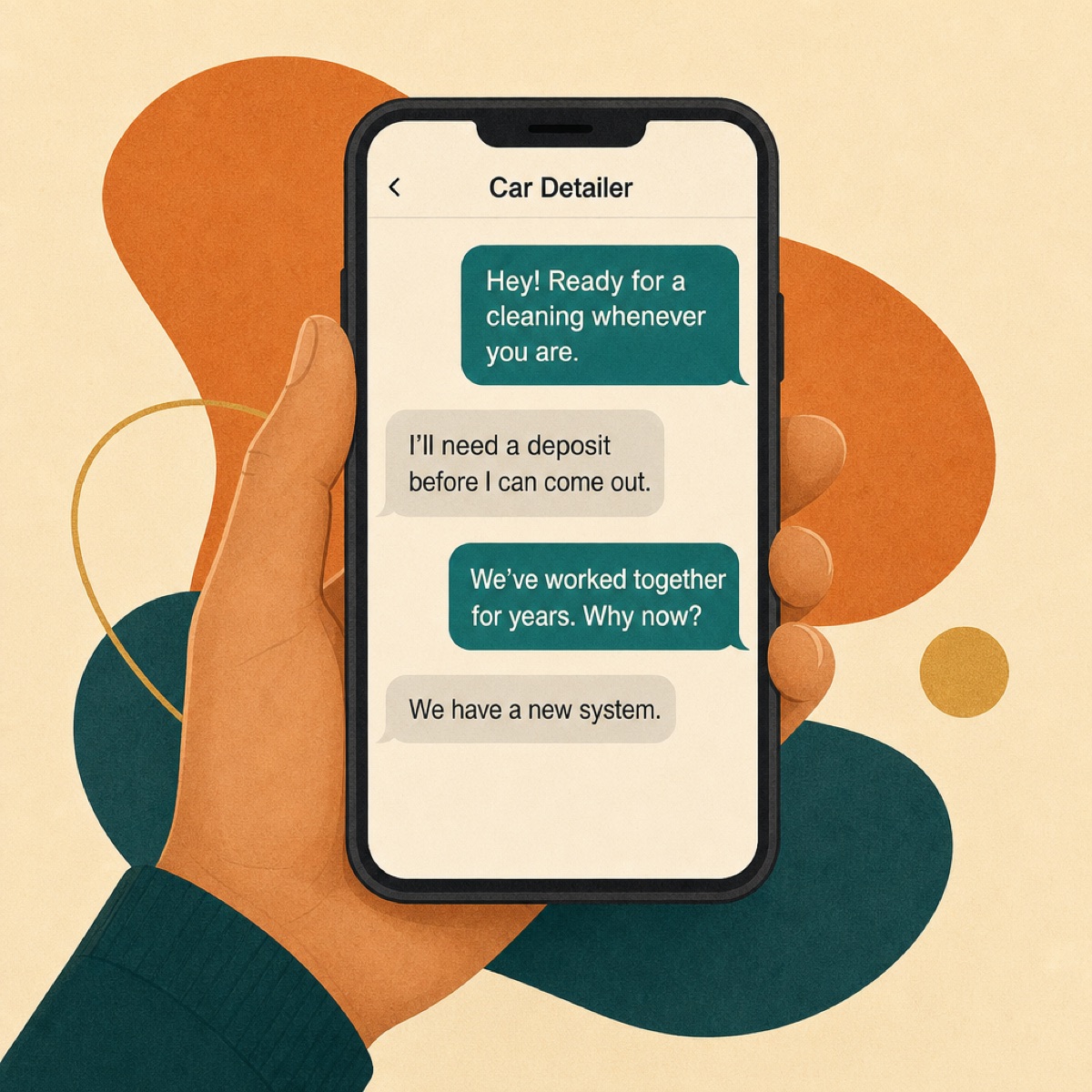
A deposit. From me. After years of paying on the spot, every time, with a tip on top. I've never stiffed this guy. Not once. So I asked him why.
"We have a new system."
"We have a new system" is not an answer
That's not a reason. That's a dodge. You chose the system. You own the company.
There's no corporate overlord in this story handing down rules from headquarters. There's a guy who used to be a guy with a truck, and he decided that the people who've paid him reliably for years should now prove they're good for it. Maybe the new booking software came with deposits switched on by default. Doesn't matter. Leaving a default on is a decision too.
Hiding behind "the system" is what big companies do when they don't want to own a choice a human made. It's grating when an airline does it. It's worse when a one-truck operation does it, because the entire point of hiring the small guy is that you get a person, not a policy.
The deposit bought him nothing
Let me be clear: this isn't about the money. I was always going to pay him. I paid the deposit. The car got cleaned. Life goes on.
But think about what that deposit actually got him. Nothing! I was going to pay anyway. He collected the exact same dollars he would have collected without it. What changed is that his most reliable customer just got a message, loud and clear: I don't trust you.
That's a terrible trade. The customers who were always going to pay get insulted, and you get no protection you didn't already have. The deadbeat you're actually worried about is a tiny fraction of the people you're making jump through the hoop.
The bar that holds your card hostage
I get the same feeling when I walk into a bar and they want my credit card to open a tab. They slide it into a little box behind the register with everybody else's, like we're all checking our coats at the door of a place we might rob.
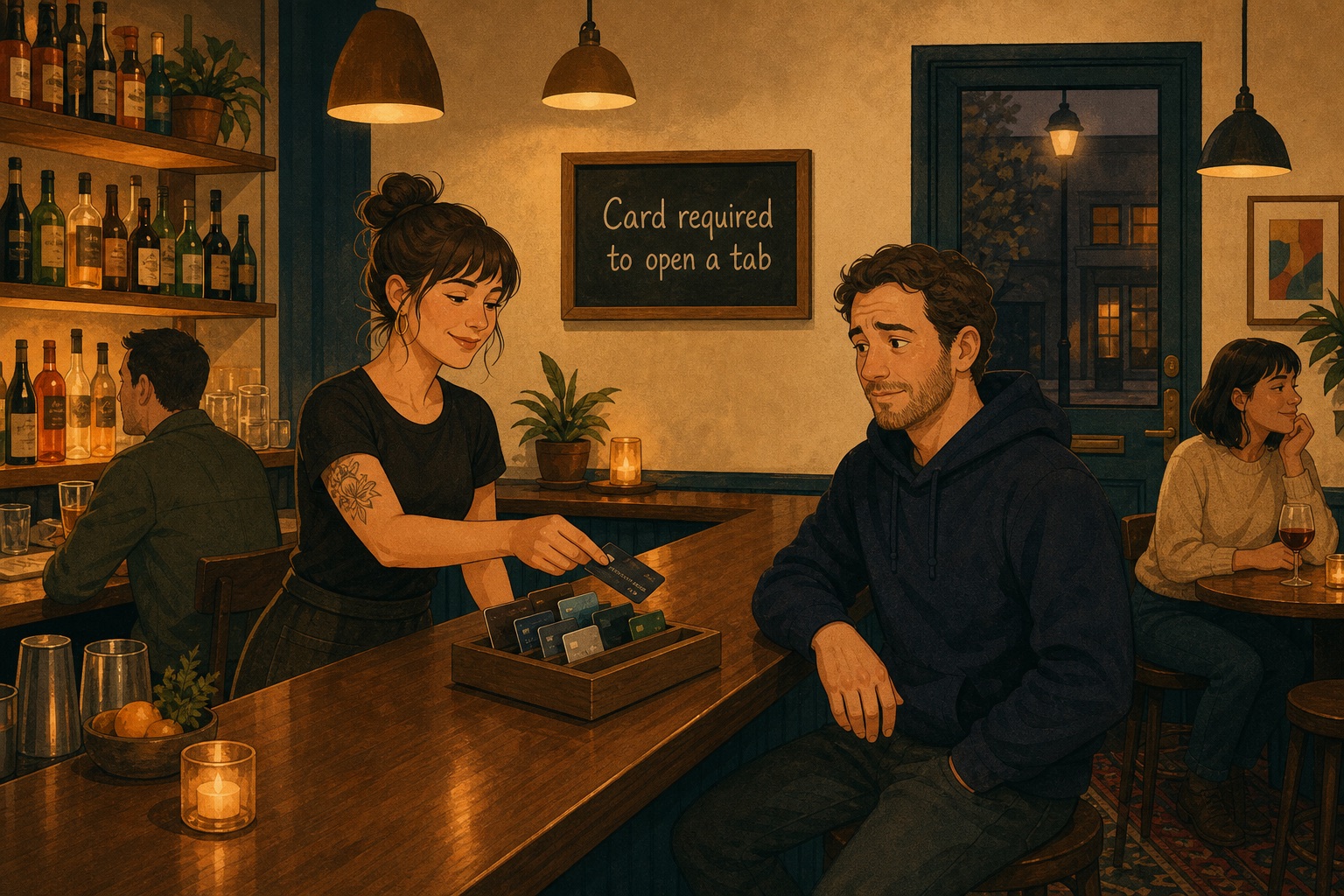
At a packed nightclub where half the room is hammered and the exit is a mob? Fine. I get it. That's a real risk. But in a quiet little neighborhood bar where the bartender can see the only door and nobody is getting sloppy? It's unnecessary. It's a rule written for the worst customer and applied to every customer.
Jason Fried and DHH nailed this years ago in Rework. They call policies "organizational scar tissue" and "collective punishment for the misdeeds of an individual." That's exactly what this is. Somebody once walked out on a tab, and now every person who sits down gets treated like a suspect.
Small slights turn into blind spots
Some people will say I'm making a big deal over nothing. Maybe. But this stuff works below the surface. Most customers won't complain. Most won't even consciously notice. They'll just walk away with a faint bad feeling about your business, and that feeling sticks around.
It's not logical. It doesn't have to be. It's real.
Here's where it actually costs you. When a friend asks me if I know a good car detailer, or a good bar, I'm not going to stand there and recite a grievance about deposits. I'm just not going to think of you. Your name quietly falls off my list, because the last memory I have of you is a tiny insult.
You'll never see the referral that didn't happen. It won't show up in your booking software or your bank account. But it's the most expensive line item in your distrust policy, and you're paying it every month.
Protect yourself, but default to trust
None of this means be a pushover. Run a business long enough and somebody will try to screw you. Protect yourself where the risk is real:
- New customers. A deposit from a stranger is reasonable. You don't know them yet.
- Big jobs and special orders. If you have to buy expensive parts up front, ask for money up front.
- The people who actually burned you. If someone no-shows or stiffs you, put the deposit on them. Not on everyone.
And if you really must run the new system, exempt your regulars. Let it kick in for first-timers and switch off after a customer has a few paid jobs behind them. Most software can do that. If yours can't, pick different software. Again: you chose the system.
Design your business around the customers you want, not the ones you fear. Your best customers have earned the benefit of the doubt. Give it to them.
Err on the side of trusting your customers. The handful you'll lose to the occasional deadbeat will cost you far less than the many you'll quietly lose by treating everyone like one.