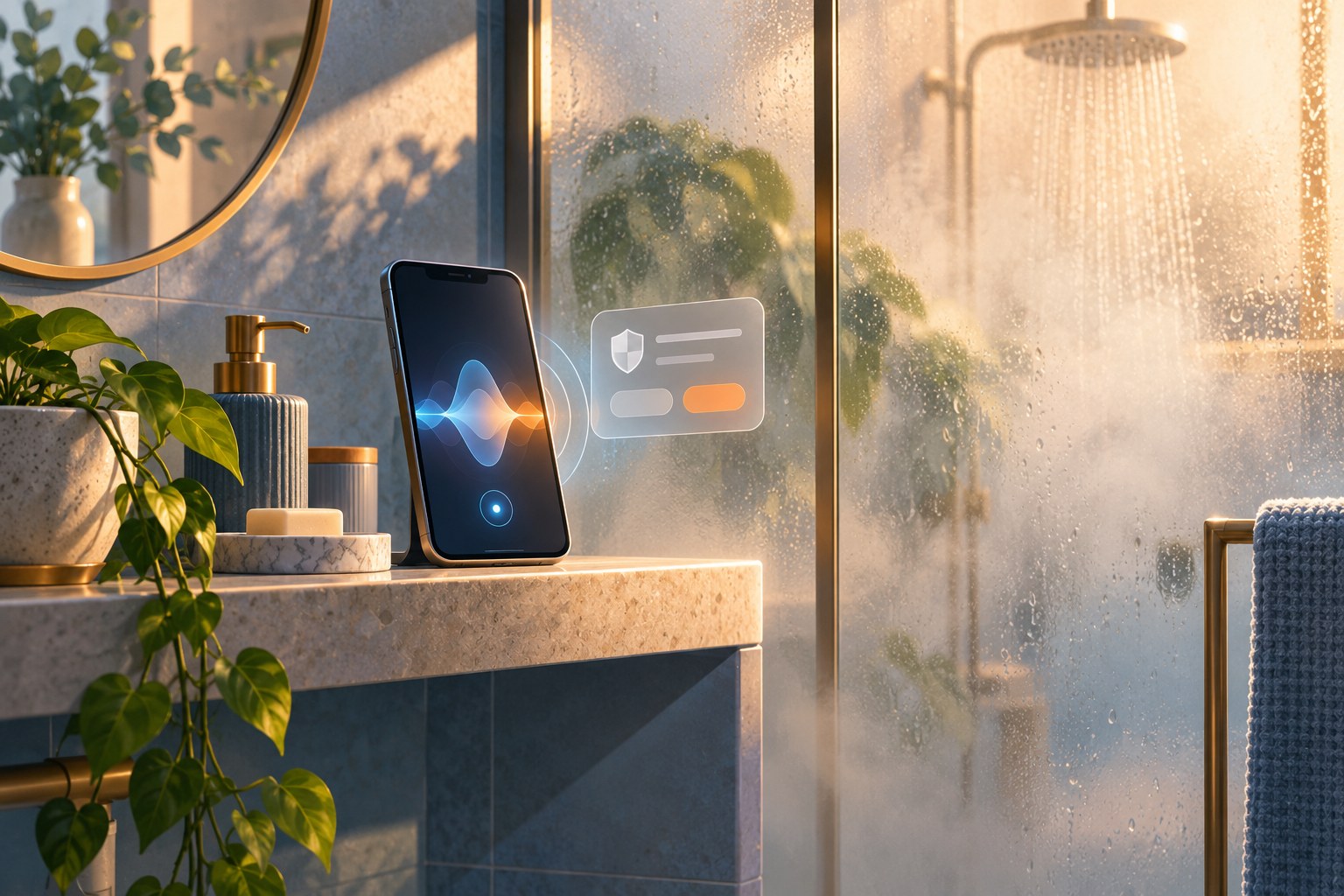
I talked through this blog post with an AI agent while taking a shower. By the time I was dried off and dressed, it was live.
Seriously. I called Sandy, my ChatGPT Dot, and rambled about the different personal AI agents I've been trying. We worked through what I liked, what annoyed me, and how I wanted to put it together. Then I hung up and let it handle the rest.
While I finished showering and getting dressed, Sandy checked out this site's source code, turned our conversation into an article, created the artwork, built the Hugo site, opened and merged a pull request, and verified that the published post was actually live. I didn't have to open my editor or run a deployment.
That's pretty cool.
It's also a good example of why I find this whole category so exciting and so frustrating. The conversation feels like the future. Getting the agent to finish ordinary work can still involve a surprising amount of going back to a screen and pressing buttons.
Three agents, three different tradeoffs
I've been trying ChatGPT Dot, Grok Bot, and my own setup, which I call Autumn. These are impressions from using them for my own work, not a controlled benchmark or an exhaustive product review.
The short version: Grok Bot has been more useful to me than Dot for getting work done with fewer interruptions. Dot has felt smarter and is better to talk to. Autumn gives me the control and custom workflows I want, so it remains my primary assistant. There are things I want to keep from all three.
ChatGPT Dot: the conversation is the best part
The thing I really like about Dot is being able to call it and have a conversation. I can talk through an idea while driving or doing something where my hands are busy. I don't have to sit down at a keyboard, organize my thoughts, and write a perfect prompt. I can just start talking.
The voice is good, too. The intonation and back-and-forth make it feel much closer to talking to a person than issuing commands to software. I can pause, change direction, add context, and keep going.
And I can ask for several things at once. Start looking into one thing, bring up another, then come back to the first. That ability to have work happening in parallel is a big part of the appeal. It feels like having an assistant rather than another application to manage.
Compared with Grok Bot, ChatGPT has felt smarter, more detailed, and better at working through an idea with me. This post is a pretty good example. But a great conversation doesn't automatically make it the agent I want handling my day-to-day work.
The permission prompts keep breaking the flow
Here's the part that drives me nuts: constantly being asked for permission to do something I've already asked the agent to do.
I'll ask it to register for a website or handle some basic task, and we hit another approval prompt, a terms-of-service step, or a guardrail that stops the process. Now I have to get involved again. Sometimes I'm doing enough of the work myself that I start wondering what I delegated in the first place.
The most annoying version of this has been with voice. I'm talking to Dot. It asks whether I want it to proceed. I say yes. But for some actions, that verbal approval hasn't been enough. I still have to open the app and press something.
If I'm already sitting at my computer, that's an interruption. If I'm driving or, apparently, taking a shower, it defeats a lot of the reason I wanted a voice assistant.
At the very least, I want to be able to approve an action verbally during the conversation I'm already having.
I'm describing what I've run into, not claiming every task is blocked or every agent has the same rules. These products are changing quickly. But the interruptions have been frequent enough that they affect whether I can use them as my primary assistant.
A capable model is only part of what makes an agent useful. I also need it to finish the job without pulling me back into the process at every step.
Grok Bot: fewer interruptions, more work getting done
As a rule of thumb, I've found Grok Bot better than Dot for the practical side of being an agent. It has been less restrictive in my experience, which means fewer interruptions and less of me having to jump back in to move a task along. That's a big deal. The point of delegating something is to get it off my plate.
Grok Bot still has limitations. I'm not saying it will do anything I ask or that it never needs my help. But compared with Dot, I've found the balance more useful when I want an agent to go do something rather than keep bringing the task back to me.
The tradeoff is that it can feel less smart. I don't find its answers or its ability to work through things with me as good as ChatGPT's. Grok Bot also has audio chat, so I can talk to it, but the voice and the back-and-forth haven't felt as natural as Dot's.
If I could combine Dot's conversation and reasoning with Grok Bot's willingness to get on with the work, I'd have something much closer to the hosted assistant I want. For now, neither has replaced my own setup.
Autumn: why I'm sticking with my own agent
I started building my own agent over a year ago. Autumn is essentially Claude Code with a collection of instructions and custom skills that teach it how I do things. I've added more of those skills this week as I've been comparing the hosted alternatives.
I run it on my own desktop, where it has access to the tools and information I need it to work with. I can shape the workflow around my life instead of trying to fit my life into someone else's idea of how an assistant should operate.
For browser work, Playwright MCP has been particularly useful. For repeatable jobs, I write a skill. That gives Claude Code a specific way to handle the task, and it means I don't have to explain the same process from scratch every time.
There's a little Go application around it that handles scheduled routines and connects it to Slack. Some routines run through cron; others are scheduled through the app. Underneath, they're still Claude Code skills doing the work.
- Scheduled work: check my email for power bills and pull together monthly bill or credit-card summaries.
- On-demand work: send Autumn a request in Slack, or talk to it directly in a Claude Code terminal session.
- Browser tasks: use Playwright MCP when the work needs to happen through a website.
- My recurring processes: put the steps in a skill so I can trigger the workflow again without another long explanation.
I wrote more about the foundation in my earlier post about building a personal AI assistant in Slack. The setup keeps evolving, but the basic idea is the same: a capable model, my tools, and instructions that match the way I work.
For me, this gets more of the actual work done with fewer interruptions. I'm choosing the tools and configuring the access myself. That control matters a lot when you're comfortable building software.
What my homemade agent is missing
I can't call Autumn and have the kind of conversation I just had with Sandy.
I have the terminal and Slack. Those work well, but neither gives me that easy, natural, real-time voice interaction. And after using it with Dot, I really miss it.
This is why I keep trying the hosted agents. I want the big labs to get this right. Being able to talk through a messy idea, delegate several things, and get useful work back is powerful. I just want that experience to carry all the way through to completion.
A hybrid setup might be the interesting middle ground
One experiment I've found promising is connecting Grok Bot to my own tools instead of asking it to handle everything itself.
I've used Grok Bot with Tailscale to SSH into my home computer and interact with my Claude Code instances. Herdr and its MCP connection to those sessions are part of the workflow I'm exploring.
That gives me a way to combine Grok Bot's interface and more flexible execution with the custom skills and setup I already have. Grok Bot can coordinate the request, while Claude Code handles work in the environment I've built for it.
I've had enough success with that combination to think it's worth exploring. It hasn't convinced me to switch my primary setup, but it shows how you can string these tools together into something useful rather than waiting for one product to do everything.
Who I'd recommend these agents to
I hate the word normies, but for lack of a better word, I'm going to use it here. If you're not a technical person, both ChatGPT Dot and Grok Bot are absolutely worth checking out. There's a lot of power available without having to build a Go app, wire up Slack, or maintain a collection of Claude Code skills.
If you're a software engineer willing to put some effort into your own setup, I still think building your own is worth it. You can tailor it to the work you actually do. You can run it where your tools are. And you have much more control over how the pieces fit together.
For now, Autumn is staying my primary agent. Grok Bot is the hosted option I've found more useful for getting things done with less friction. Dot is the one I most enjoy talking to. I'll keep experimenting with both, because I'd love to have that easy conversation and reliable execution in one place.
After all, I just talked through a blog post with one while taking a shower. I'd love for the rest of the experience to feel that effortless.